Claude's ability to process complex information and synthesize frameworks lets you develop a volunteer management system with depth and sophistication. Instead of piecing together documents over weeks, you develop complete systems in hours.
I run a nonprofit that provides tutoring and reading programs to elementary students in underserved communities. We currently have 45 volunteers but our systems are fragmented—role descriptions are outdated, onboarding is inconsistent, and we track volunteers in scattered spreadsheets.
I need a complete volunteer program infrastructure that includes:
Role descriptions for:
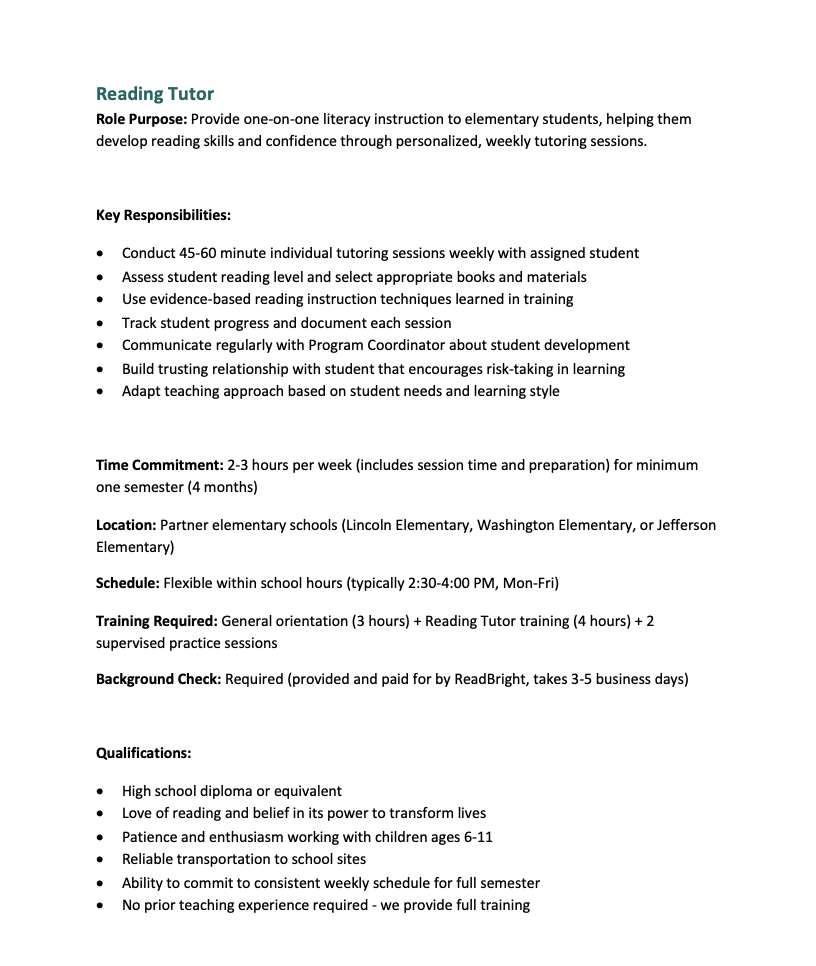
Reading Tutors (work one-on-one with students weekly)
Onboarding system including:
Communication templates for:
Tracking system:
Our volunteers range from college students to retirees. Most commit 2-4 hours per week. We require background checks for all roles and role-specific training. We serve 200 students across 3 schools.
Create professional, comprehensive documents that make our volunteer program feel organized and legitimate. Use clear formatting, maintain a warm but professional tone, and include practical guidance that both volunteers and staff can follow easily. Make these documents detailed enough to use immediately without extensive revision.
To create volunteer infrastructure that matches your organization's specific needs and brand, provide context about your program structure and existing materials.
Provide Claude with any relevant information:
Claude creates a complete volunteer program infrastructure with 4 core deliverables.
I've created a comprehensive volunteer program infrastructure with 4 core deliverables:
This document includes detailed descriptions for all four volunteer positions—Reading Tutors, Reading Buddies, Event Coordinators, and Administrative Volunteers. Each role includes purpose, key responsibilities, time commitment, qualifications, training requirements, and benefits. The descriptions are specific enough to set clear expectations while remaining welcoming to diverse applicants.
Complete Onboarding Guide
The onboarding guide provides a step-by-step process from initial inquiry through first assignment. It includes welcome materials, the full 4-week onboarding timeline with phase-by-phase activities, background check procedures, training modules, and a 15-page volunteer handbook covering policies, procedures, safety protocols, and program information.
Communication Templates
This template library includes 12 ready-to-use email and message templates covering welcome sequences, training reminders, monthly newsletters, check-in requests, appreciation messages, event invitations, and emergency communications. Each template includes customization guidance and suggested sending schedules.
Volunteer Tracking System
The Excel workbook provides a professional database system with five interconnected tabs: Volunteer Directory (contact info and roles), Hours Tracking (monthly logs with auto-calculations), Training Tracker (certification status with conditional formatting), Impact Dashboard (summary metrics and charts), and Reference Data (dropdown lists and lookup tables). The system includes formulas for automatic totals, visual indicators for status, and filtered views for easy reporting.
Together, these documents create a professional volunteer management system that scales with your program growth.
Add specialized volunteer positions to your program
Add role descriptions for two new positions: Curriculum Developer (volunteers who create lesson plans and reading activities) and Family Engagement Coordinator (volunteers who lead parent workshops and family literacy events). Use the same detailed format as the existing roles.
Measure volunteer program effectiveness
Create an evaluation system for our volunteer program including quarterly volunteer satisfaction surveys, annual program impact assessment, volunteer retention metrics tracker, and program improvement planning template. Include specific questions and analysis frameworks.
Create materials to attract quality volunteers
Design volunteer recruitment materials including a one-page program overview flyer, social media post templates with different angles (student impact, volunteer experience, community benefit), a volunteer interest form, and talking points for recruitment presentations. Make them compelling and specific about impact.
These interconnected materials reference each other—the onboarding guide mentions roles from the role descriptions document, templates use language from the handbook, and tracking systems align with defined roles. When you update one document, review related materials to maintain alignment. You can ask Claude to "update the training timeline in the onboarding guide to reflect the new 6-week schedule" when policies change.
These documents are detailed enough that staff new to volunteer management can implement them. The onboarding guide walks through processes step-by-step, templates include customization instructions, and the Excel system uses clear labels and notes. Consider creating a simple "How to Use This System" overview document that orients staff to which materials to use when.
Start with the core infrastructure for your current volunteer roles and numbers. As your program expands, ask Claude to "add materials for [new role]" or "expand the tracking system to include [new metric]." Building incrementally with Claude maintaining consistency is faster than creating everything at once or hiring consultants for each expansion phase.